

Luzenac, in Ariège, capital of talcum powder
The village of Luzenac, 10 minutes from your home camping de l'Ariège La Marmotte
No doubt at the origin Luzenac was already occupied by farming estates, but there is no historical record of this village before 1074. This date corresponds to the donation of the Lordadais, one of the cantons of the Count of Foix, to the Abbey of Cluny. This small seigneury, which once had a "castella" on the site of Sourtadeil, was home to around a hundred inhabitants. Today, the castrum no longer exists. For many centuries, the village was sustained by agrosilvicultural and pastoral activities, before developing around the slate quarries and the Catalan-style forges, which were powered by the water power generated by the numerous water mills on the Ariège.
In 1848, 126 inhabitants of Luzenac and Unac formed a syndicate to acquire mountain land, including woodland, and this joint ownership of communal property continues to this day.
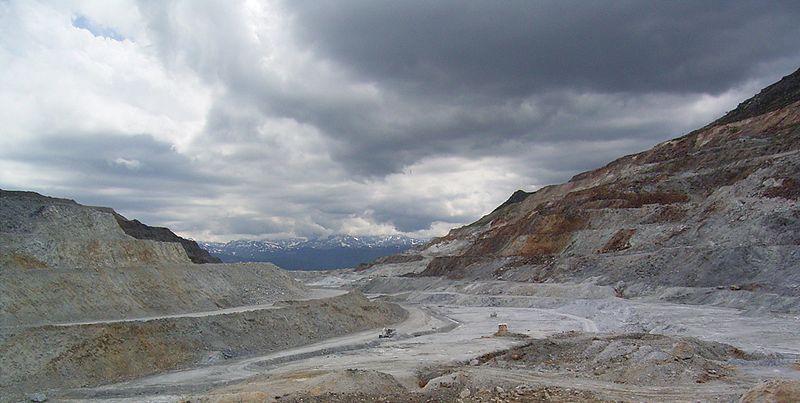
Luzenac in Ariège, capital of talcum powder
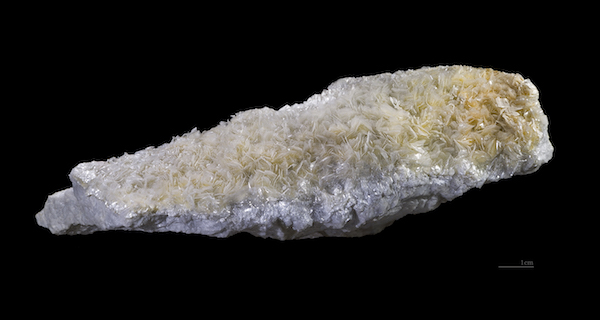
Talc is a natural mineral. It is found as a soft, crumbly rock with veins running beneath the Tabes mountain range at Troumns, where silica and magnesium have combined to form hydrated magnesium silicate (talc). Talc was already mined on a small-scale basis in the 19th century by men who harvested it by scratching the surface of the ground to remove blocks that they took to Toulouse, where it was sold to drugstores in the regional capital.
But it wasn't until the 20th century that Luzenac really began to grow economically, thanks to talc production, which led to prosperity and population growth. The Société Anonyme des Talcs was founded in 1905 and a factory was set up on the site of the Labail mill, before moving to the current site in 1913.
Talc was first produced industrially by Société des Talcs, in a small family factory. Today, after just over a century in business, Société Anonyme des Talcs is a major global group with around 350 employees.
The Luzenac
During its operation, two major elements will enable the company to enter its industrial phase:
- In 1888, with the arrival of the railway in the valley
- 1903 saw the installation of the first overhead cable linking the quarry (at an altitude of 1,700 m) to the plant.
Production has risen from 825 tonnes in 1888 to 400,000 tonnes today.
Stored in huge sheds as soon as the skips arrive at the plant, the rocks are dried before being crushed and reduced to a very fine powder before being shipped around the world. Talc is used in a wide range of industrial applications, not just on babies' bottoms!
Ceramic industries 31 %- paper 21 % - paint 19 % - roofing 8 % - plastic 5 % - rubber 4 %- cosmetics 2 % - other 10 %.
In 2006, Société des Talcs became "Rio Tinto Minerals-Luzenac" and belonged to the Australian-British mining group Rio Tinto before being acquired in 2011 by the French group IMERYS. The company is now called Imerys Talc Luzenac France.
Visit to the Trimouns quarry site
The Trimouns quarry stretches for 2 km and is one of the largest in the world. As it is an open-cast mine, it ceases operations during the winter, from December to March. The talc ore is extracted from a vein under the ground at a depth of around 1,000 metres, thanks to the incessant ballet of hydraulic shovels digging up the earth, bulldozers and lorries moving tonnes of earth (1 tonne of ore requires 8 tonnes of earth to be moved). As soon as the ore is extracted, an automatic sorting system selects the purest talc, which is brilliant white.
The cable car then transports the water via 5km of cables to the Luzenac treatment plant, 1000m below.
For all information about visits:
Trimouns talc quarry
09250 LUZENAC
Vallées d'Ax Tourist Office 05 61 64 60 60
Site : www.vallees-ax.com
Email : valles.ax@wanadoo.fr
group bookings: 05 61 64 68 05
Don't hesitate to visit this original and unusual industrial site in the Ax valley, during your your summer holiday at camping de Savignac les ormeaux " Les marmottes.
Credit: https://upload.wikimedia.org/wikipedia/commons/a/a5/France_Luzenac_Carriere_Talc.JPG
Pethrus [CC BY-SA 3.0 (https://creativecommons.org/licenses/by-sa/3.0)]
https://upload.wikimedia.org/wikipedia/commons/7/74/Talc.jpg
Didier Descouens [CC BY-SA 4.0 (https://creativecommons.org/licenses/by-sa/4.0)]


