

Luzenac, in Ariège, capital of talcum powder
The village of Luzenac, 10 minutes from your Ariège campsite La Marmotte Luzenac was probably originally occupied by farming estates, but there is no historical record of the village before 1074. This date corresponds to the donation of the Lordadais, one of the cantons of the Count of Foix, to the Abbey of Cluny. This small seigneury, which once had a "castella" on the site of Sourtadeil, was home to around a hundred inhabitants. Today, the castrum no longer exists. For many centuries, the village was sustained by agrosilvicultural and pastoral activities, before developing around the slate quarries and the so-called "Catalan" forges, which were powered by the water power generated by the numerous water mills on the Ariège. In 1848, 126 inhabitants of Luzenac and Unac formed a syndicate to acquire mountain land, including woods, and this joint ownership of communal property still persists today.
Visit to the Trimouns quarry site
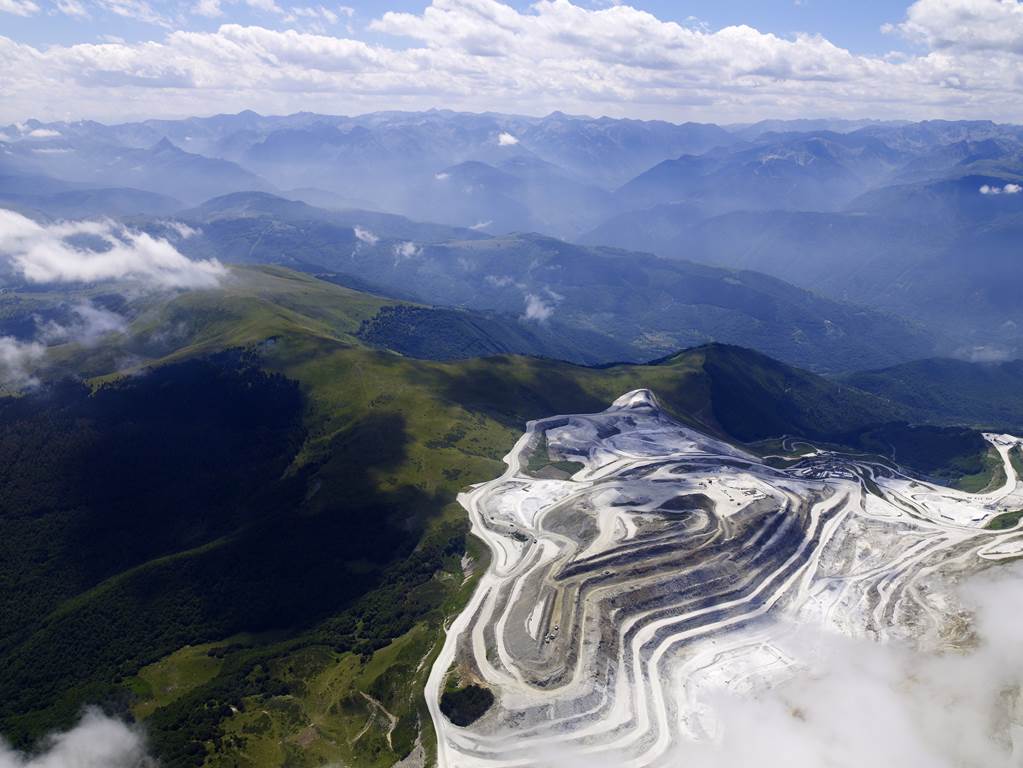
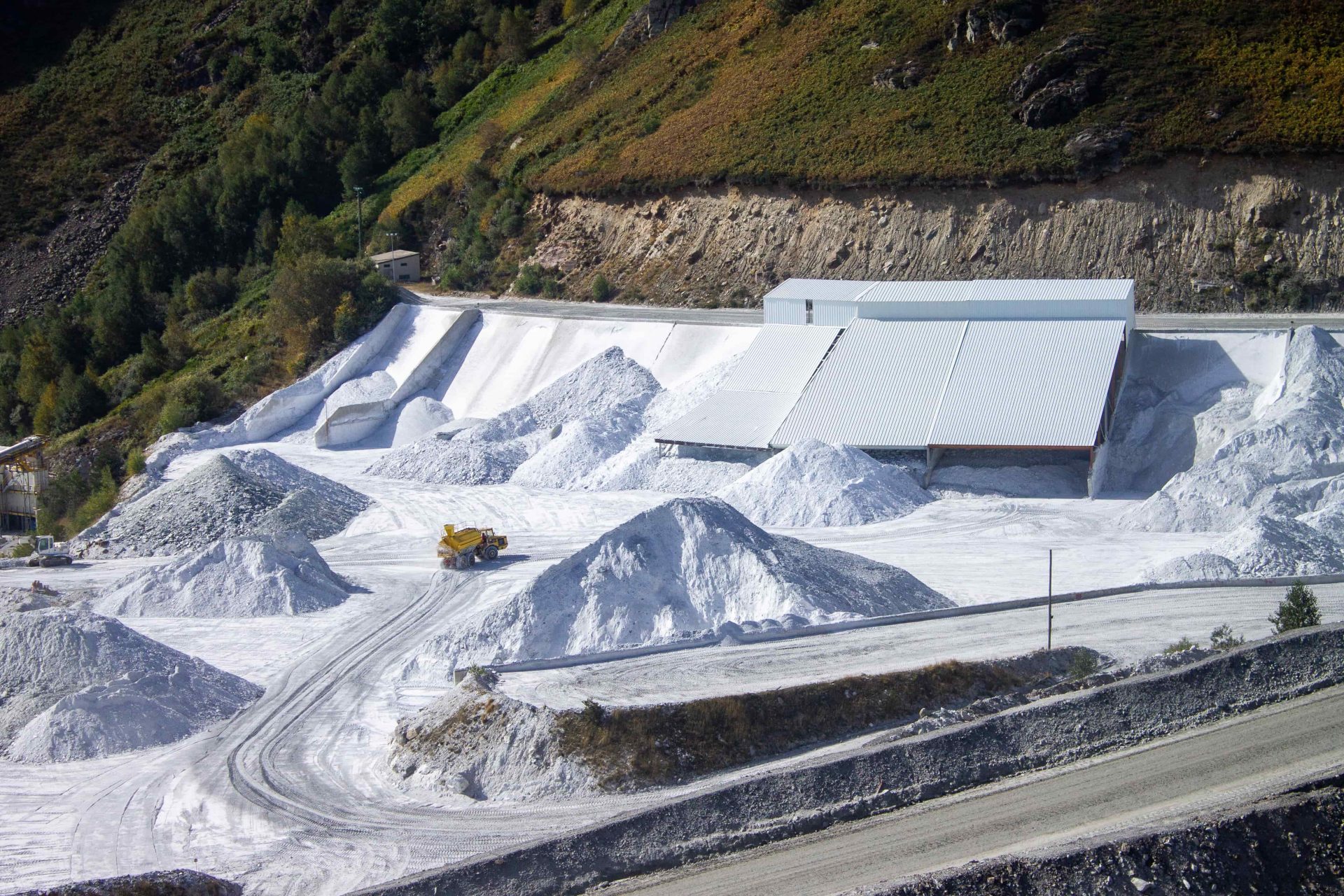
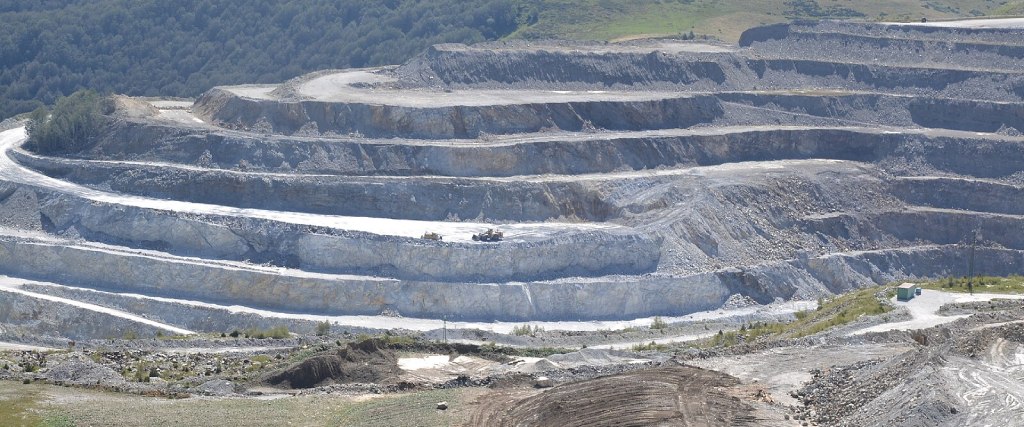
The Trimouns quarry stretches for 2 km and is one of the largest in the world. As it is an open-cast mine, it ceases operations during the winter, from December to March. The talc ore is extracted from a vein under the ground at a depth of around 1,000 metres, thanks to the incessant ballet of hydraulic shovels digging up the earth, bulldozers and lorries moving tonnes of earth (1 tonne of ore requires 8 tonnes of earth to be moved). As soon as the ore is extracted, an automatic sorting system selects the purest talc, which is brilliant white.
The cable car then transports the water via 5km of cables to the Luzenac treatment plant, 1000m below.
For all information about visits:
Trimouns talc quarry
09250 LUZENAC
https://www.pyrenees-ariegeoises.com/offres/talcaneo-la-visite-de-la-carriere-de-talc-et-de-lespace-museographique-luzenac-fr-4295354/
Feel free to visit this original and unusual industrial site in the Ax valley during your summer stay at the «La Marmotte» campsite in Saignac les Ormeaux.


